Home / How you can help
How families can help someone with delirium
A familiar face and a calm voice help. Bring what the person needs to make sense of the world, help them eat and drink, and tell the staff what normal looks like for them.
Families often notice delirium before anyone else. What you tell the team can help them recognise it, and simple things at the bedside can make the person less frightened and confused.
You are the expert on their normal self
Staff meet your father for the first time when he is already ill, whereas you have known him for decades. Delirium is diagnosed by one change above all: the person is different from their normal self. Nobody can judge that better than you.
About 1 in 4 older people admitted to hospital have delirium at some point in their stay. And around 1 in 3 episodes start after admission, so someone who arrived clear-headed can become confused on day three or four. Hospitals should look for new changes at least daily, but delirium developing after admission is still often missed. A family member’s report remains important.
So say what you see, and be specific: when you last saw them well, and what is different now. Use the word delirium. Saying “He is nothing like his normal self. Could this be delirium?” is enough to help staff decide what to check. Worried families sometimes hold back for fear of being a nuisance, but this is information the team needs, and good staff know it. If the answer does not satisfy you, ask again, or ask someone more senior. If you feel the change is not being taken seriously, raising concerns with staff explains what to say and how to ask a more senior member of staff for help.
And watch for the quiet form. Much delirium is hypoactive (the quiet form), in which the person becomes sleepy, flat and withdrawn rather than agitated. A patient dozing peacefully looks settled, and this is the kind of delirium most often missed. Unusual drowsiness is as much a warning sign as shouting or restlessness. More about unusual sleepiness and hypoactive delirium
Tell the team what only you know
Once delirium is suspected, the team starts looking for causes, and much of what they need is in your head, not in the hospital notes. Useful things to tell them include:
- What the person is normally like: sharp, forgetful but managing at home, or already diagnosed with dementia.
- Medicines, including anything recently started or stopped, and how much alcohol they usually drink, including whether they have recently reduced or stopped drinking.
- Hearing and sight. Do they use aids? Where are they?
- The days before admission: any new illness, poor eating or drinking, falls, disturbed nights.
- Previous episodes of delirium, for example after an operation. Having had it before makes it more likely again.
- Personality and preferences: the name they answer to, how they take their tea, what calms them, what upsets them.
That detail can help staff recognise the change.
A family’s experience. Margaret, 84, was admitted with pneumonia and developed delirium two days later. She was distressed and disorientated, and would not let staff help her wash or give her medicines. Her daughter Anne could not stay for long periods because of work. She told the nurses what helped her mother. Her mother was a proud retired piano teacher, preferred “Mrs Hughes” from strangers, was calmed by talk about her garden and was happiest taking tablets one at a time with milk. The staff used all of it. They called her Mrs Hughes, chatted about her roses while helping her wash, and gave the tablets her way. Margaret stayed confused for several days, but she was less frightened, and she began to accept care even when Anne was not there.
At the bedside
Start with your presence. A familiar face and voice can make someone with delirium feel safer. Sit quietly and, if they welcome touch, hold their hand. Say who you are.
Talk simply and gently, in short sentences, one idea at a time. Mention the day, the place and what happens next as part of natural conversation (“It’s Tuesday morning. You’re in hospital. Lunch is coming soon.”), rather than testing them with questions.
If they say things that are not true, do not argue and do not play along. Respond to the feeling (“That sounds frightening. I’m here with you.”) and then talk about something safe and familiar. The belief feels completely real from the inside, and arguing rarely works.
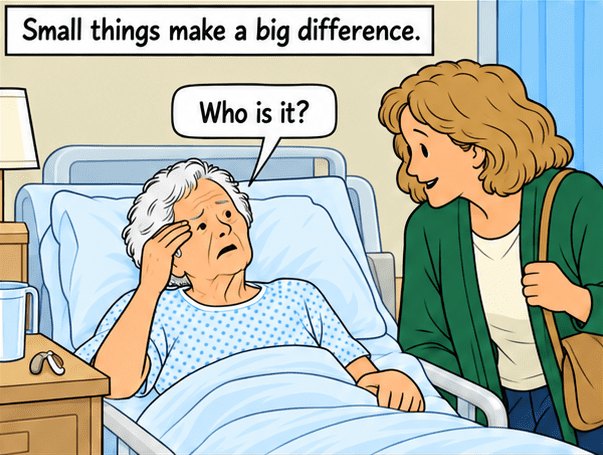
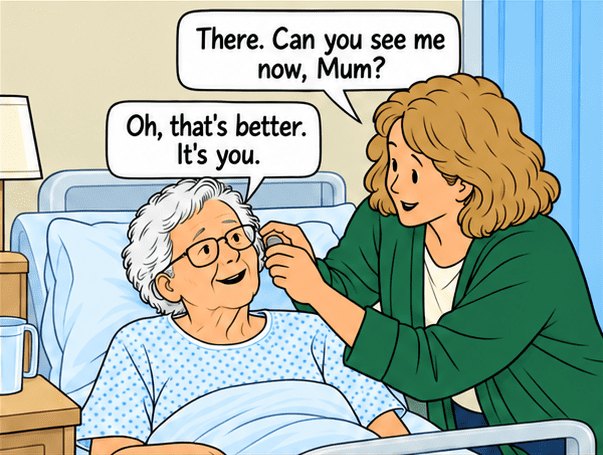
After that comes the kit: glasses on and clean, hearing aids in and working (with spare batteries in the drawer), dentures in, and a clock or calendar where they can see it. Bring a few things from home, such as photographs, their own blanket, or the crossword page. Familiar music, played quietly, helps some people. Keep daytime visits lively and the evening calm.
Drinks, meals and moving
Dehydration and missed meals both cause delirium and slow recovery from it. A person with delirium may forget to drink, get distracted mid-meal, or no longer notice thirst at all.
First ask staff what foods, drink textures and amounts are safe, including whether there is a swallowing plan or limits on how much the person should drink. Do not give food or drink if the person is too drowsy to swallow safely. Follow the care plan. If staff say it is safe, offer small amounts often; little and often usually works better than a full glass presented twice a day. Offer favourite drinks and use the person’s own mug if appropriate. Some foods count towards fluid, but check what is allowed. Tell staff if you notice a dry mouth, dark urine or increasing drowsiness.
What if they refuse food, drink or medicines?
Tell the care team promptly, especially if important medicines or fluids are being missed. Ask whether pain, nausea, mouth problems, swallowing difficulty or fear is making care harder. Use calm, short explanations and offer choices. Do not force food or drink, or hide or crush medicines on your own. Ask the team or pharmacist for a safe plan. If the person is too drowsy to swallow safely, do not give anything by mouth and seek urgent help.
Movement also helps. Lying in bed weakens the body within days, and getting up again, even briefly, is part of the treatment of delirium. Ask the team what is safe, then encourage it: sitting in the chair for meals, standing with help, a short walk along the corridor.
When you are not there
No one can hold a bedside vigil all day, and no one should try. Share the visiting around the family if you can, because short, regular visits may be easier than one long visit.
And what you tell staff keeps helping after you leave. Anne’s briefing about the garden and the milk was still helping at two in the morning, while she was asleep. Phone the hospital ward or unit when you are unable to visit, ask for the nurse looking after your relative, and ask them to phone you if anything changes overnight.
Afterwards
Most delirium improves over days, though some episodes last weeks or months, and recovery of thinking often lags behind recovery of the body. The bedside habits still apply at home: regular drinks and meals, glasses and hearing aids on, a steady routine, daylight during the day and quiet at night. Follow any discharge advice about swallowing, food texture, fluid limits, walking aids and whether someone needs to help them. After delirium: what to expect covers this period properly.
Looking after yourself
This is tiring, and often upsetting, and it can go on for weeks. You will be more use to your relative if you are not exhausted. Eat, sleep, and take your turns away from the ward without guilt. Share the caring around the family, and accept help when it is offered.
You are a carer, also called a caregiver, if you support someone through illness, whether or not you use either word about yourself. Ask local health or social care services about practical help, breaks from caring and support for your own wellbeing. The Resources page explains how to find support where you live and links to organisations in several countries. If your own mood, sleep or anxiety is suffering, tell your own doctor.
- You know the person’s normal self better than anyone. Your report of a sudden change is often what leads to the diagnosis.
- Quiet, sleepy delirium is common and often missed. Report drowsiness as well as agitation.
- Tell the team about medicines, hearing and sight, alcohol, previous delirium, and what the person is normally like, down to the name they answer to.
- At the bedside: short sentences, no arguing with false beliefs, glasses and hearing aids on, a clock in view, a few familiar things from home.
- Before helping with food or drink, ask about the swallowing plan, safe textures and any limits on how much the person should drink. Never give food or drink if the person is too drowsy to swallow safely.
- Getting up and moving is part of the treatment. Ask what is safe, then encourage it.
- Share the visiting, and phone the ward or unit when you are unable to visit.
- You do not have to do all of this. Choose the things that are safe and useful for this person.
Printable guides for the ward
Helping at the bedside (PDF)
The bedside points on one printable page.
Download Helping at the bedside (PDF)More questions
Why is he seeing things that are not there?
Why is she worse in the evening?
All questions families ask