Read story D14: This time we knew (image and text)
This time we knew
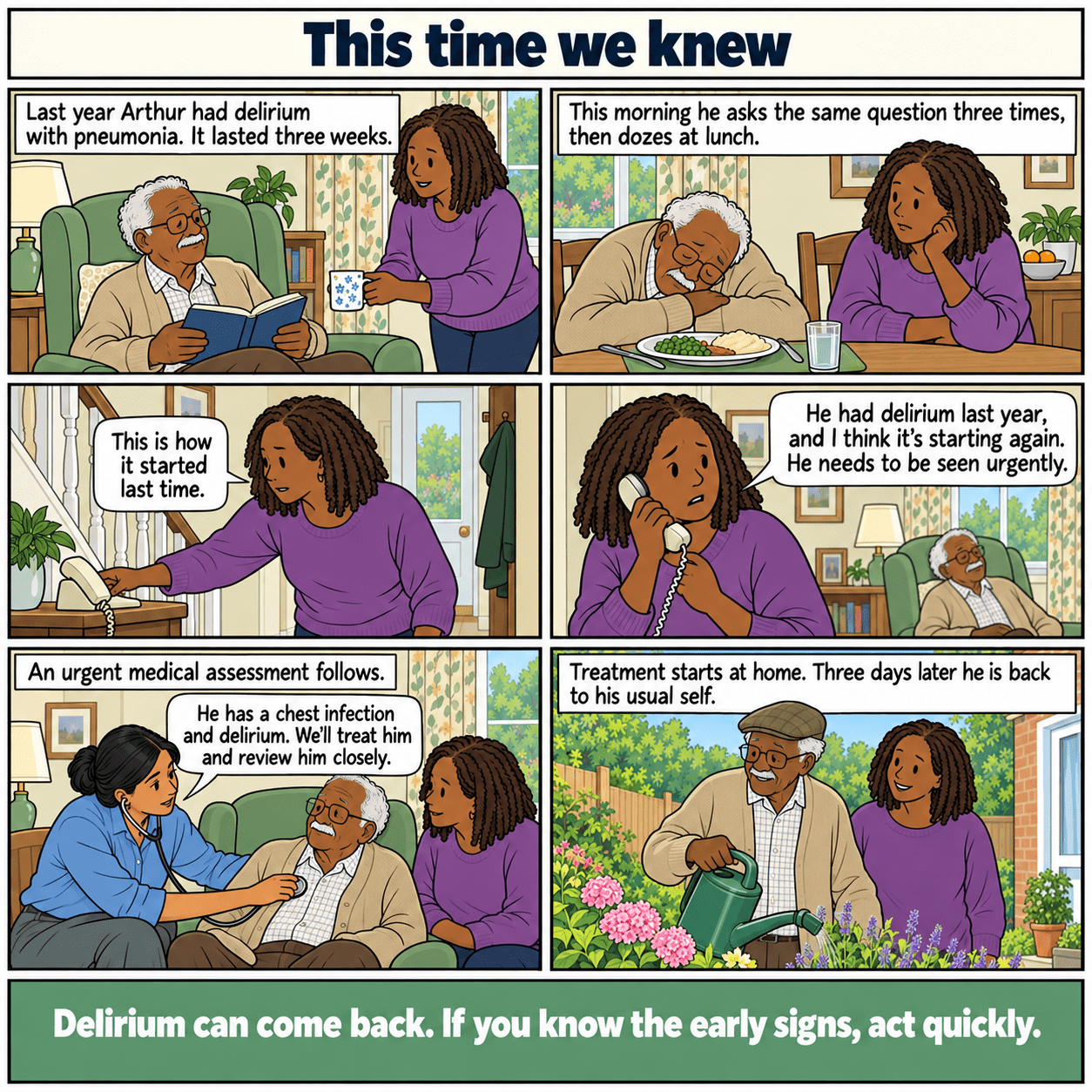
Wendy recognises a change like the start of her father’s previous delirium. She seeks urgent help and explains both the new symptoms and the earlier episode.
Having had delirium before is useful information for the treating team. A new episode still needs assessment for its causes. Tell staff what changed and when, even if the person seems better for part of the day. This example improves after treatment; early recognition does not guarantee a short or uncomplicated recovery.
Story text
Panel 1. Last year Arthur had delirium with pneumonia. It lasted three weeks.
Panel 2. This morning he asks the same question three times, then dozes at lunch.
Panel 3.
- Wendy: This is how it started last time.
Panel 4.
- Wendy: He had delirium last year, and I think it's starting again. He needs to be seen urgently.
Panel 5. An urgent medical assessment follows.
- GP: He has a chest infection and delirium. We’ll treat him and review him closely.
Panel 6. Treatment starts at home. Three days later he is back to his usual self.
Bottom band. Delirium can come back. If you know the early signs, act quickly.