Read story D10: I'm going home (image and text)
I'm going home
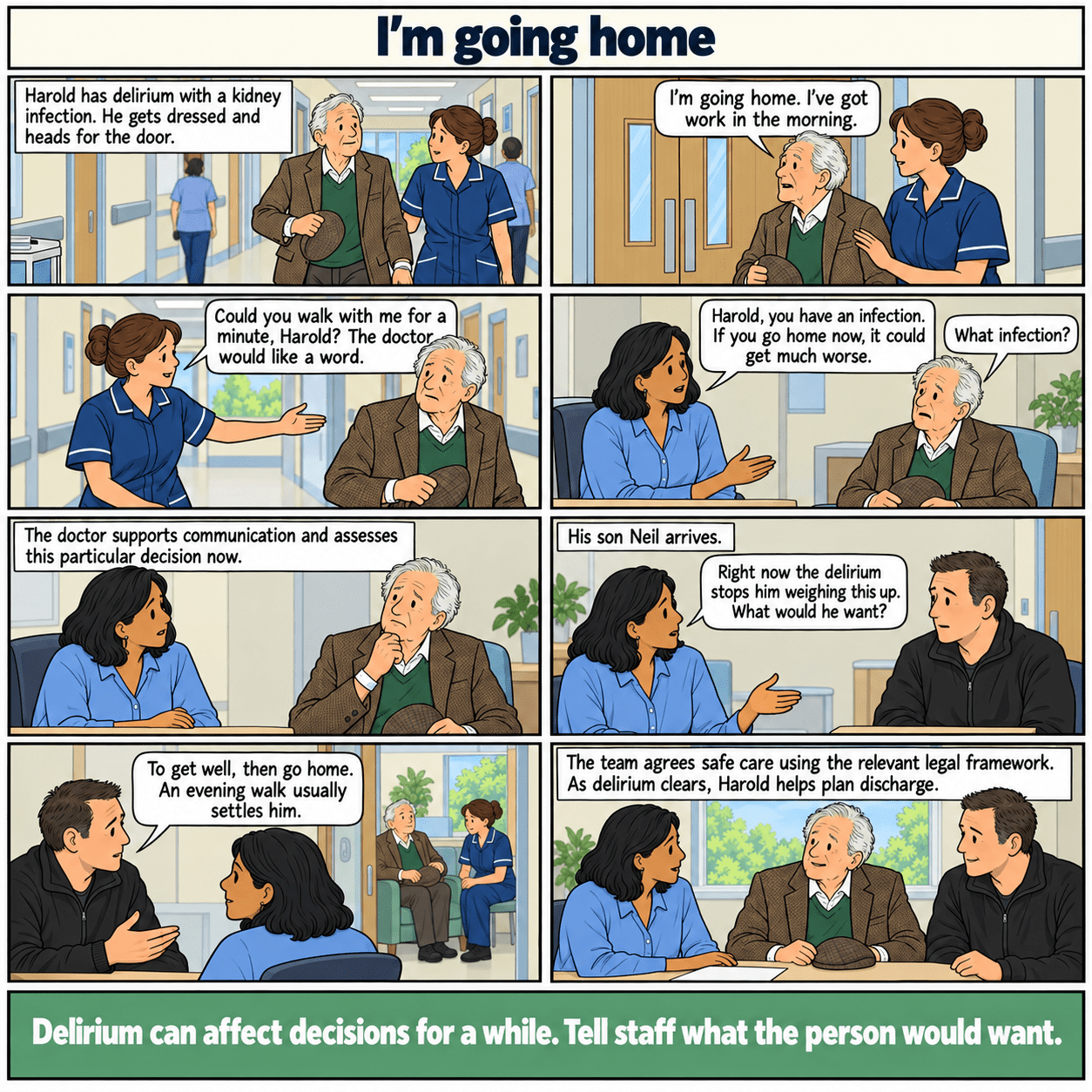
Harold wants to leave hospital while delirium affects his understanding of the illness. The team supports communication and assesses this particular decision at that time.
Delirium does not automatically remove someone’s ability to make every decision. Staff should keep the person involved, consider whether a decision can wait and use the relevant local legal framework. Where a decision is needed on the person’s behalf, their wishes and the least restrictive appropriate option should guide the plan. Tell staff about any relevant legal representative.
Story text
Panel 1. Harold has delirium with a kidney infection. He gets dressed and heads for the door.
Panel 2.
- Harold: I'm going home. I've got work in the morning.
Panel 3.
- Nurse: Could you walk with me for a minute, Harold? The doctor would like a word.
Panel 4.
- Doctor: Harold, you have an infection. If you go home now, it could get much worse.
- Harold: What infection?
Panel 5. The doctor supports communication and assesses this particular decision now.
Panel 6. His son Neil arrives.
- Doctor: Right now the delirium stops him weighing this up. What would he want?
Panel 7.
- Neil: To get well, then go home. An evening walk usually settles him.
Panel 8. The team agrees safe care using the relevant legal framework. As delirium clears, Harold helps plan discharge.
Bottom band. Delirium can affect decisions for a while. Tell staff what the person would want.