Read story D09: After the broken hip (image and text)
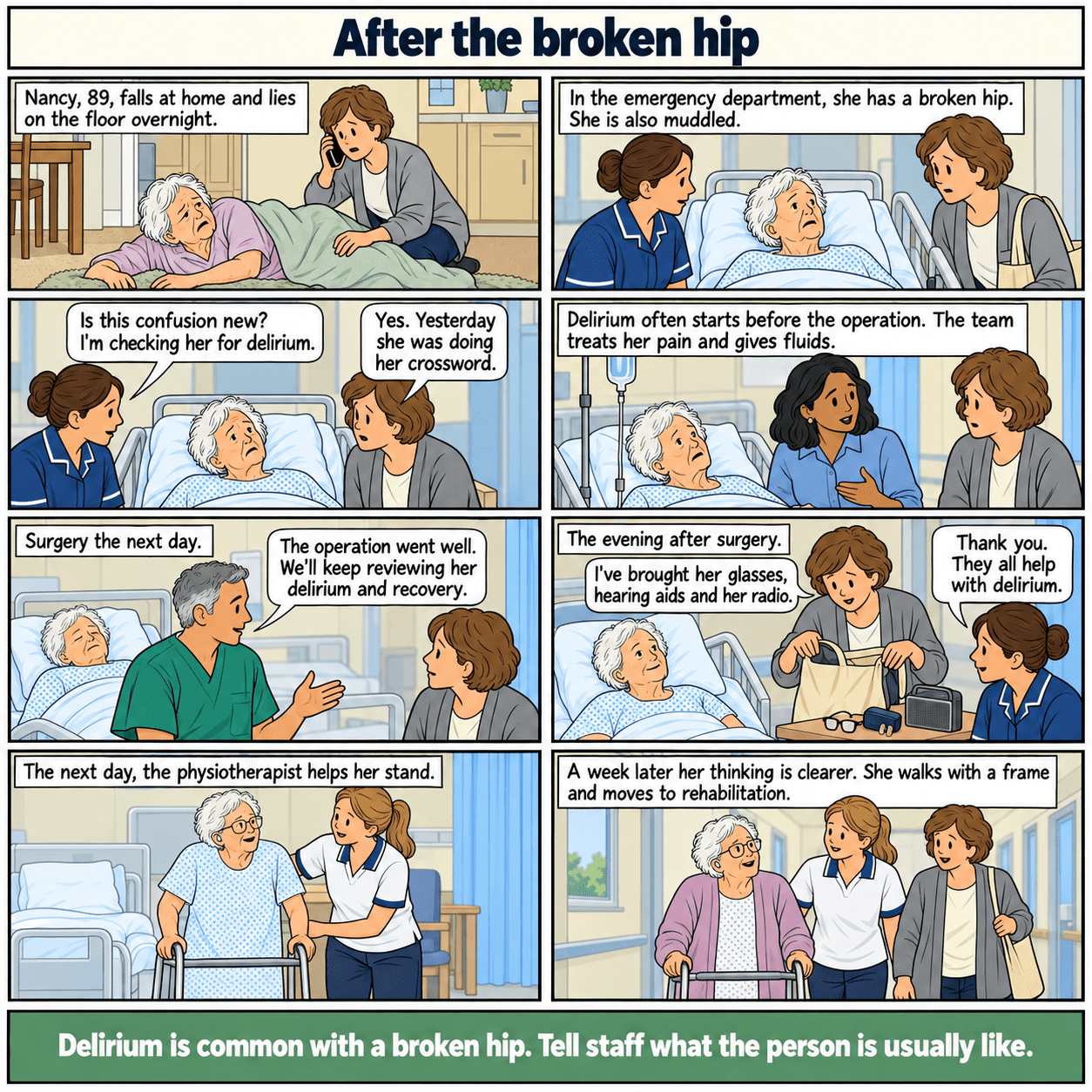
After the broken hip
Nancy is already confused when she reaches hospital with a broken hip. Delirium can begin before surgery as well as afterwards. Staff assess the new change and treat her pain and other needs.
Tell the team what the person was like before the fall. Care includes repeated assessment, appropriate pain relief, nutrition and fluids, help with movement, and hearing or vision aids where needed. Recovery varies. A clearer conversation does not mean that walking and other daily activities have fully recovered.
Story text
Panel 1. Nancy, 89, falls at home and lies on the floor overnight.
Panel 2. In the emergency department, she has a broken hip. She is also muddled.
Panel 3.
- Nurse: Is this confusion new? I'm checking her for delirium.
- Sue: Yes. Yesterday she was doing her crossword.
Panel 4. Delirium often starts before the operation. The team treats her pain and gives fluids.
Panel 5. Surgery the next day.
- Surgeon: The operation went well. We’ll keep reviewing her delirium and recovery.
Panel 6. The evening after surgery.
- Sue: I've brought her glasses, hearing aids and her radio.
- Nurse: Thank you. They all help with delirium.
Panel 7. The next day, the physiotherapist helps her stand.
Panel 8. A week later her thinking is clearer. She walks with a frame and moves to rehabilitation.
Bottom band. Delirium is common with a broken hip. Tell staff what the person is usually like.