Read story D05: Not every vision is delirium (image and text)
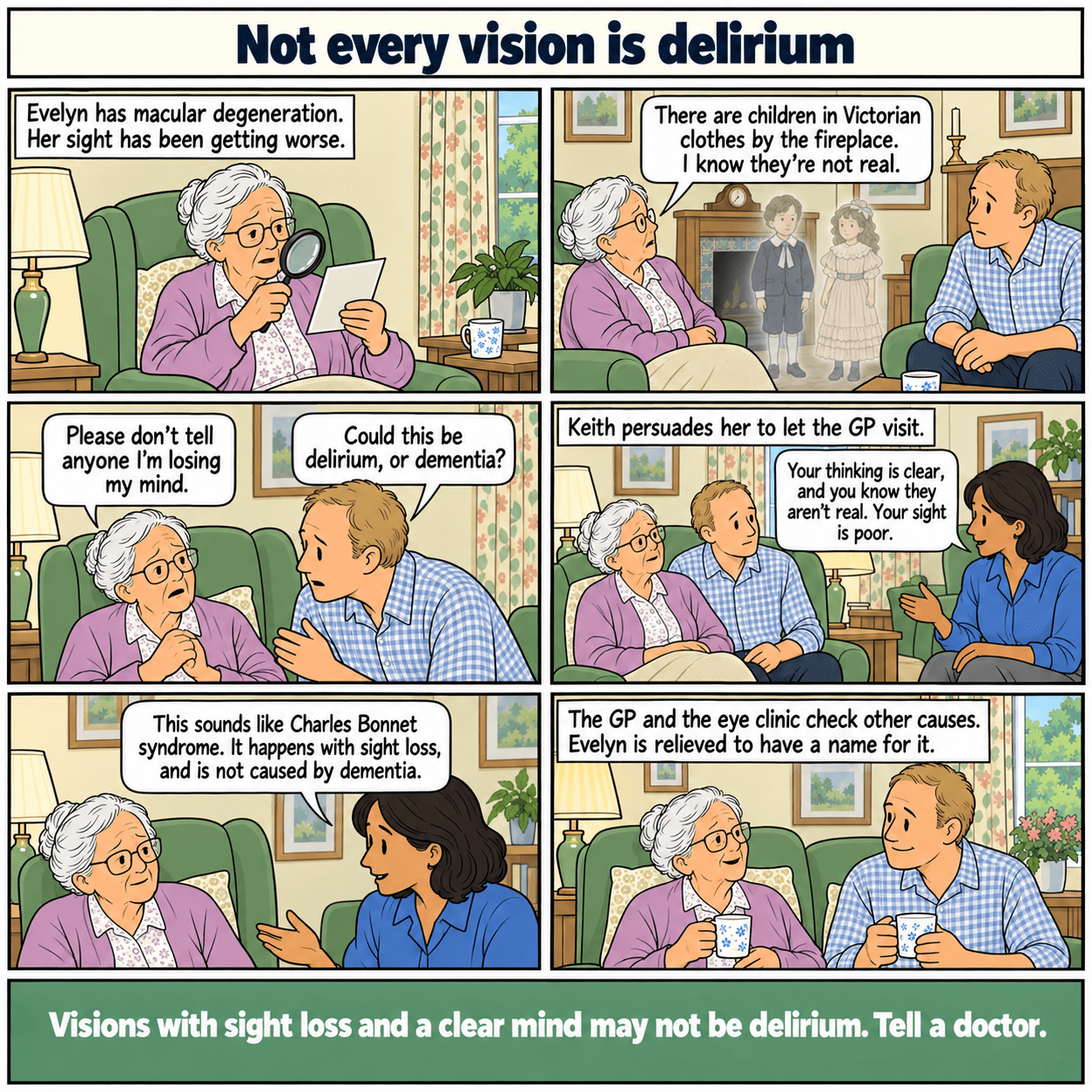
Not every vision is delirium
Seeing images that other people do not see can happen with significant sight loss. This is called Charles Bonnet syndrome. Affected people often know the images are not real, but an assessment is still needed.
Evelyn’s doctor and eye clinic check her symptoms and sight. This example does not show delirium. New hallucinations should be discussed promptly with a clinician. Sudden confusion, unusual drowsiness or a marked change in attention needs urgent medical help, whether or not the person has sight loss.
Story text
Panel 1. Evelyn has macular degeneration. Her sight has been getting worse.
Panel 2.
- Evelyn: There are children in Victorian clothes by the fireplace. I know they're not real.
Panel 3.
- Evelyn: Please don't tell anyone I'm losing my mind.
- Keith: Could this be delirium, or dementia?
Panel 4. Keith persuades her to let the GP visit.
- GP: Your thinking is clear, and you know they aren't real. Your sight is poor.
Panel 5.
- GP: This sounds like Charles Bonnet syndrome. It happens with sight loss, and is not caused by dementia.
Panel 6. The GP and the eye clinic check other causes. Evelyn is relieved to have a name for it.
Bottom band. Visions with sight loss and a clear mind may not be delirium. Tell a doctor.