Read story C43: The pain we missed (image and text)
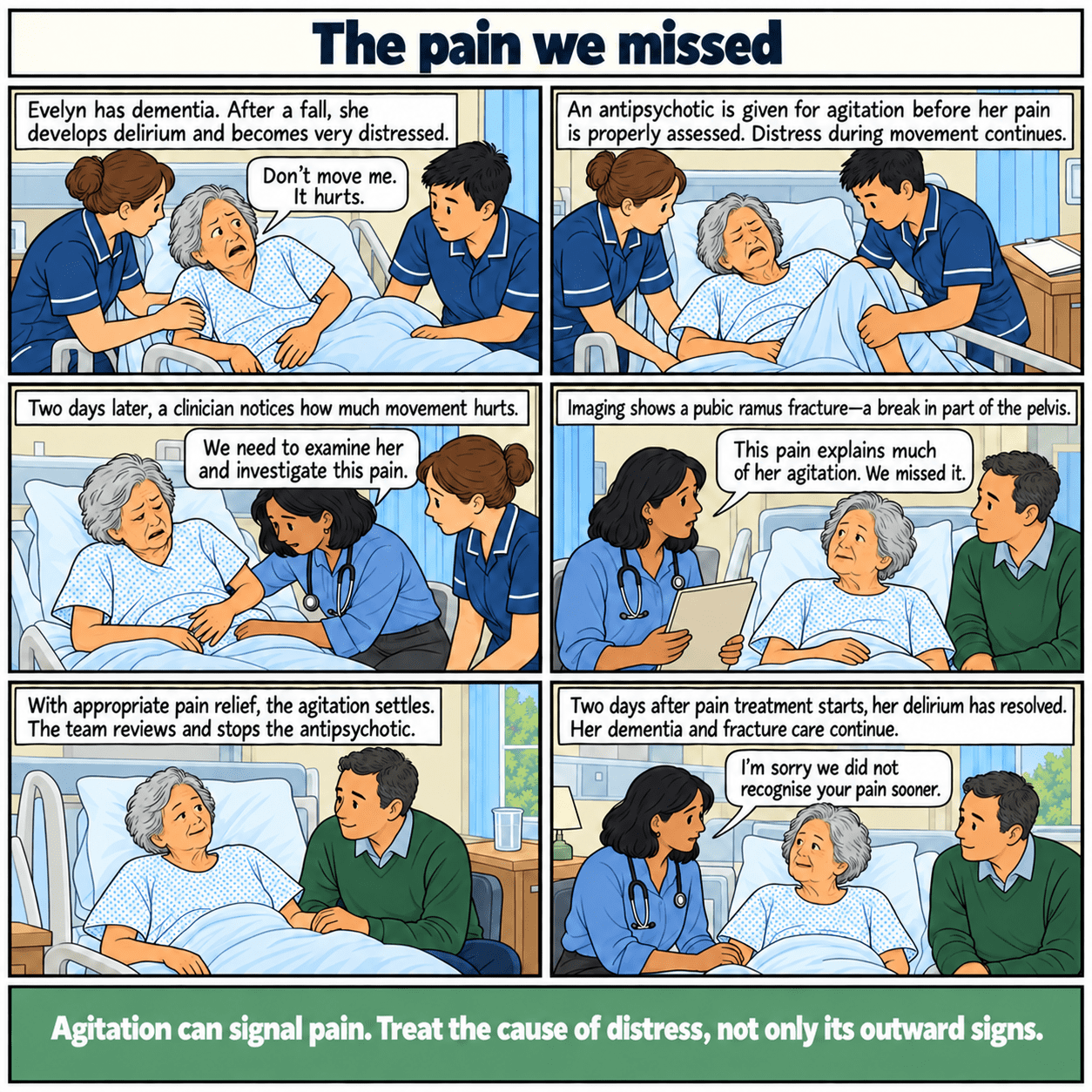
The pain we missed
Evelyn has dementia and develops delirium after a fall. An antipsychotic is given for agitation, but pain has not been properly assessed. Two days later, a pelvic fracture is found. With appropriate pain relief she is less distressed; her delirium resolves over the next two days, while fracture care continues.
Story text
Panel 1. Evelyn has dementia. After a fall, she develops delirium and becomes very distressed.
- Evelyn: Don’t move me. It hurts.
Panel 2. An antipsychotic is given for agitation before her pain is properly assessed. Distress during movement continues.
Panel 3. Two days later, a clinician notices how much movement hurts.
- Doctor: We need to examine her and investigate this pain.
Panel 4. Imaging shows a pubic ramus fracture—a break in part of the pelvis.
- Doctor: This pain explains much of her agitation. We missed it.
Panel 5. With appropriate pain relief, the agitation settles. The team reviews and stops the antipsychotic.
Panel 6. Two days after pain treatment starts, her delirium has resolved. Her dementia and fracture care continue.
- Doctor: I’m sorry we did not recognise your pain sooner.
Bottom band. Agitation can signal pain. Treat the cause of distress, not only its outward signs.