Read story C18: Six weeks is not a diagnosis (image and text)
Persistent delirium or dementia? Understanding a prolonged illness
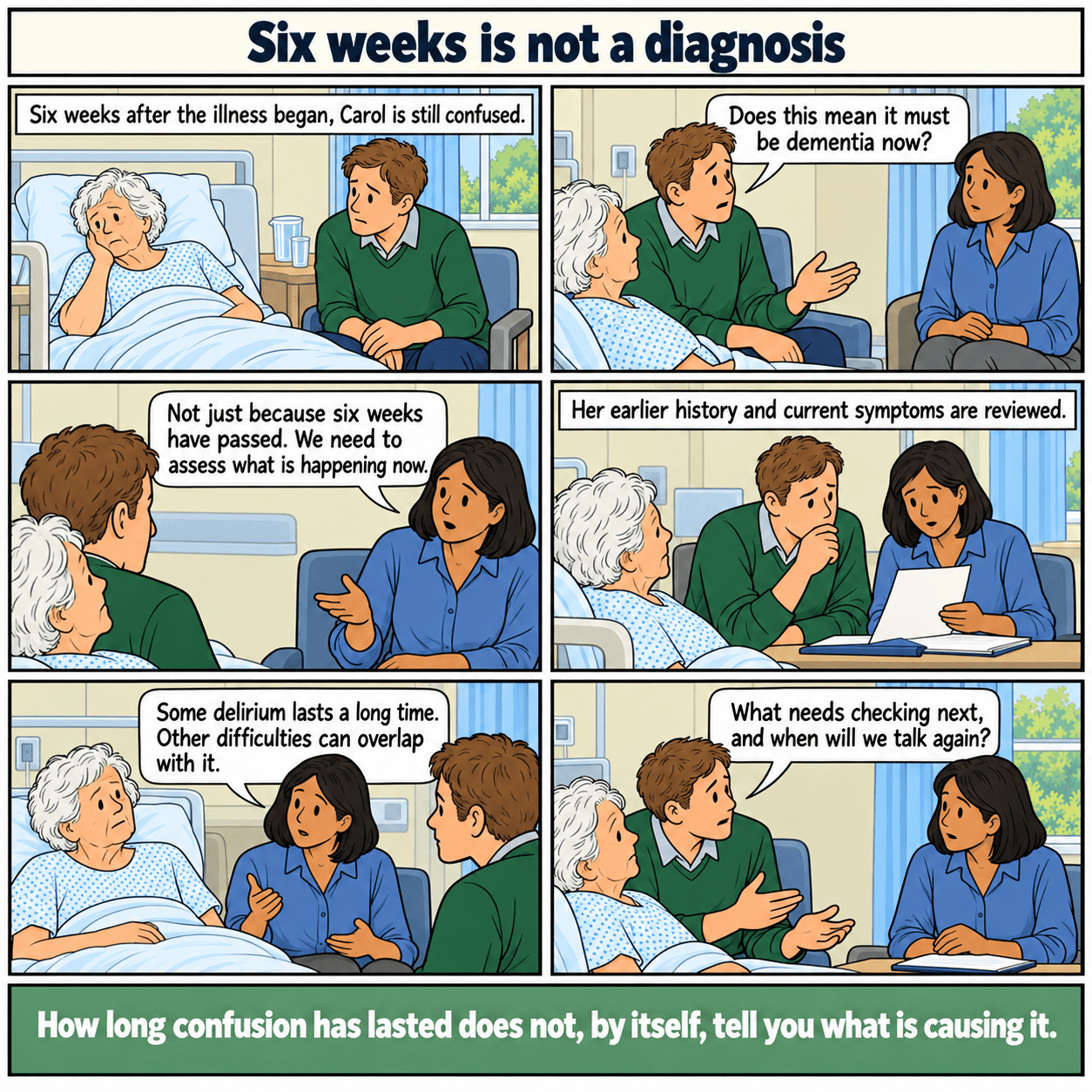
Carol remains confused six weeks after becoming ill. Dan wonders whether that means the diagnosis must now be dementia. The team reassesses her current symptoms, earlier abilities and possible contributors. Persistent delirium and longer-term cognitive problems can be difficult to separate. Duration alone does not answer the question or remove the need for care.
Story text
Panel 1. Six weeks after the illness began, Carol is still confused.
Panel 2.
- Dan: Does this mean it must be dementia now?
Panel 3.
- Doctor: Not just because six weeks have passed. We need to assess what is happening now.
Panel 4. Her earlier history and current symptoms are reviewed.
Panel 5.
- Doctor: Some delirium lasts a long time. Other difficulties can overlap with it.
Panel 6.
- Dan: What needs checking next, and when will we talk again?
Bottom band. How long confusion has lasted does not, by itself, tell you what is causing it.