Read story C02: The plan we changed (image and text)
BPSD: when the first approach to dementia-related distress does not help
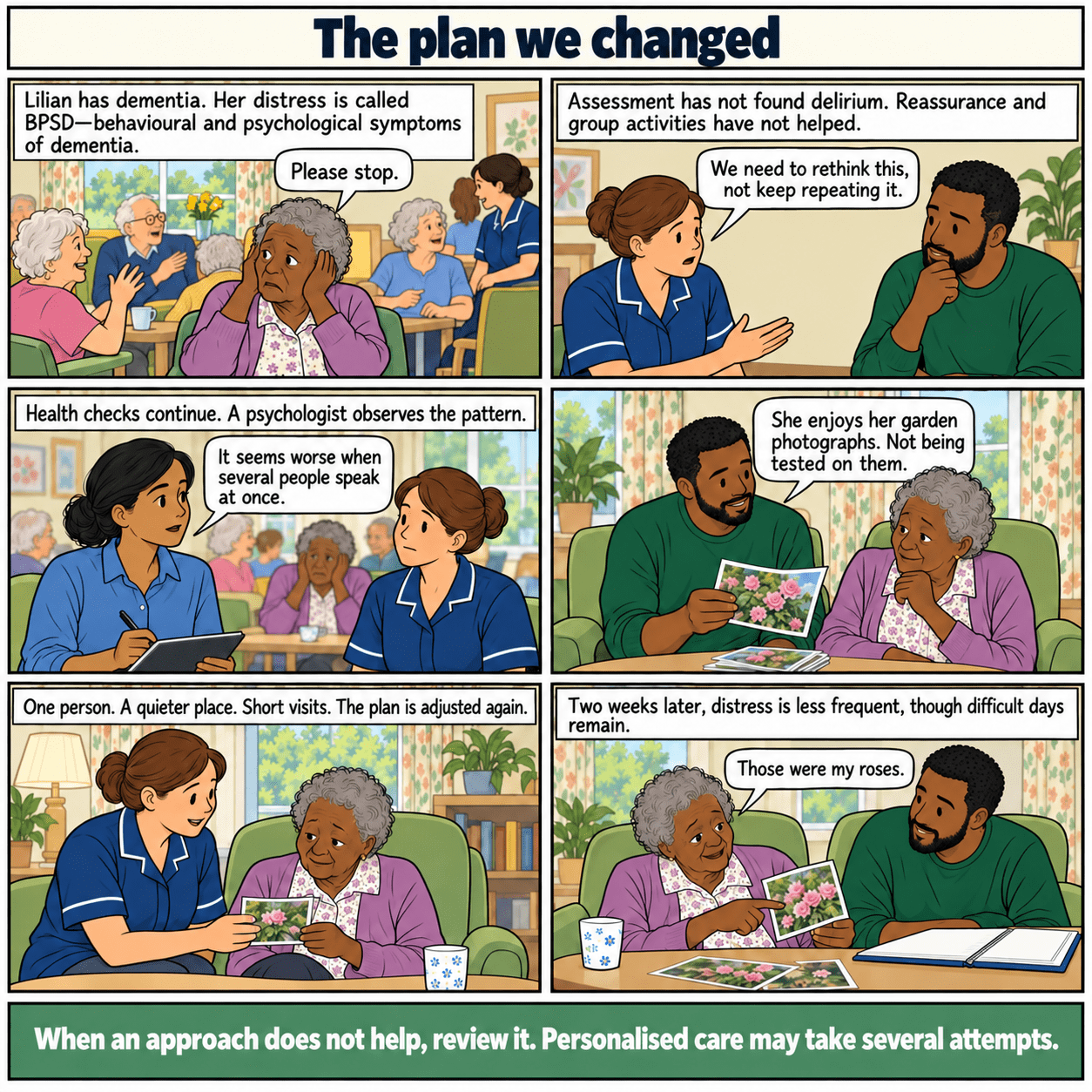
Lilian remains distressed despite reassurance and group activities. Health checks continue while a psychologist and care staff look closely at when the distress happens. The first plan is changed, tried consistently and reviewed. Improvement takes time. The aim is not to find a universal distraction, but to understand this person’s experience. BPSD means behavioural and psychological symptoms of dementia.
Story text
Panel 1. Lilian has dementia. Her distress is called BPSD—behavioural and psychological symptoms of dementia.
- Lilian: Please stop.
Panel 2. Assessment has not found delirium. Reassurance and group activities have not helped.
- Care worker: We need to rethink this, not keep repeating it.
Panel 3. Health checks continue. A psychologist observes the pattern.
- Psychologist: It seems worse when several people speak at once.
Panel 4.
- Marcus: She enjoys her garden photographs. Not being tested on them.
Panel 5. One person. A quieter place. Short visits. The plan is adjusted again.
Panel 6. Two weeks later, distress is less frequent, though difficult days remain.
- Lilian: Those were my roses.
Bottom band. When an approach does not help, review it. Personalised care may take several attempts.