This story includes death and grief.
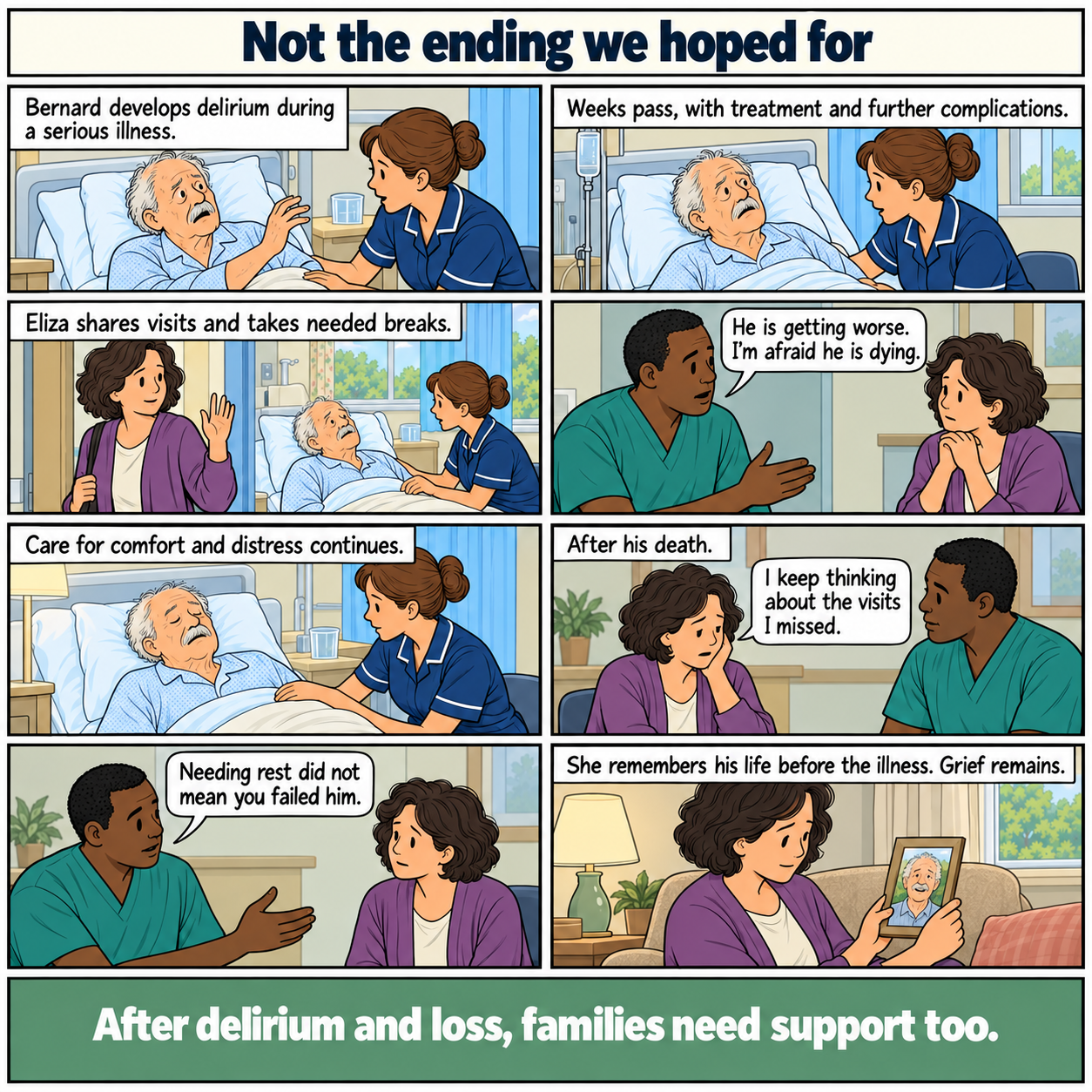
Read story B50: Not the ending we hoped for (image and text)
This story includes death and grief.
A prolonged illness with delirium can leave families exhausted. After a death, some think repeatedly about the visits they missed or the things they wish they had said.
Needing sleep, work or help with visiting does not mean a family has failed. Questions about the illness and care deserve a response, including concerns that something was missed. Support may help, but people grieve for different lengths of time and do not have to feel better after one conversation.
Story text
-
Panel 1. Bernard develops delirium during a serious illness.
-
Panel 2. Weeks pass, with treatment and further complications.
-
Panel 3. Eliza shares visits and takes needed breaks.
-
Panel 4.
- Doctor: He is getting worse. I’m afraid he is dying.
-
Panel 5. Care for comfort and distress continues.
-
Panel 6. After his death.
- Eliza: I keep thinking about the visits I missed.
-
Panel 7.
- Doctor: Needing rest did not mean you failed him.
-
Panel 8. She remembers his life before the illness. Grief remains.
Bottom band. After delirium and loss, families need support too.