Read story B44: Still me (image and text)
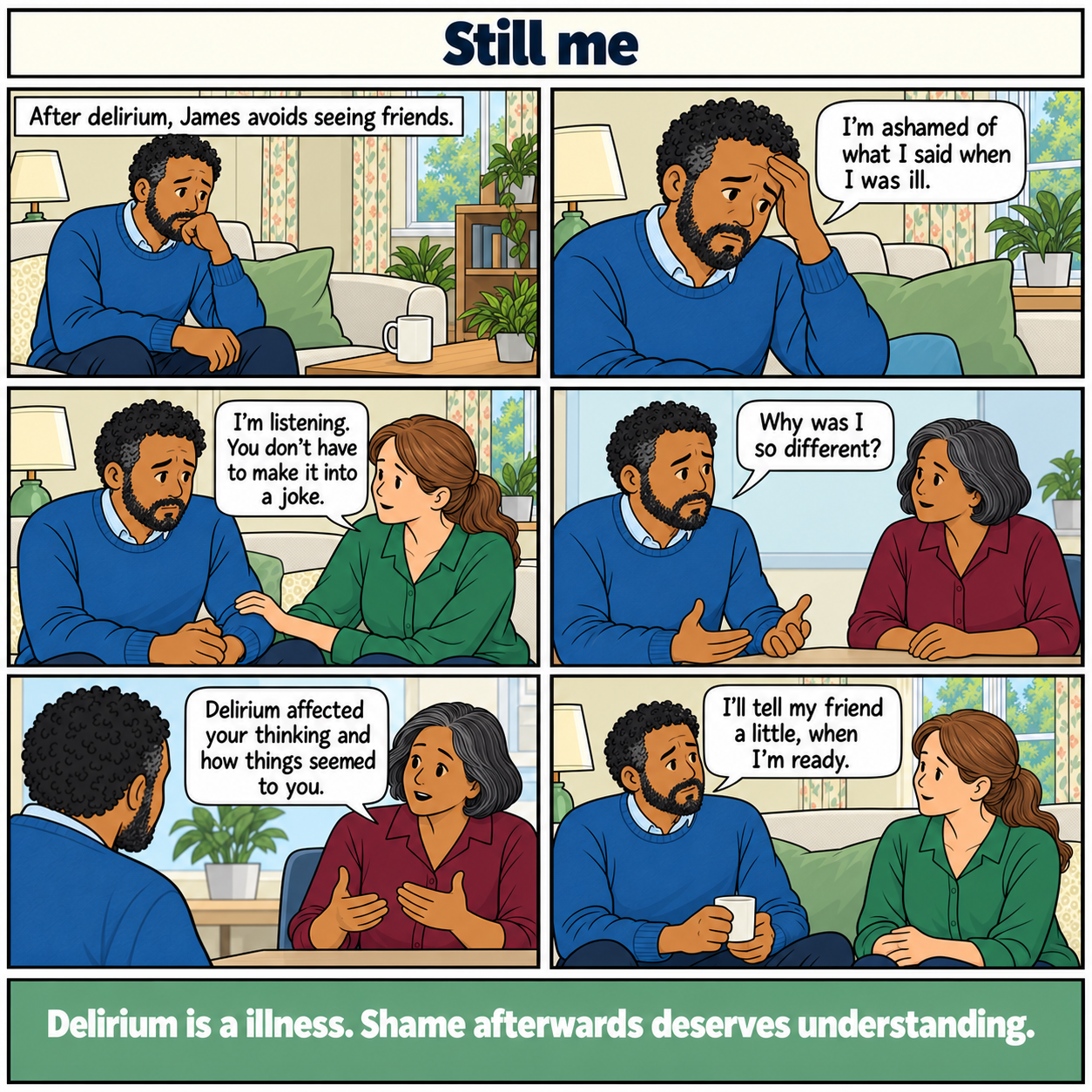
Some people feel embarrassed or ashamed about things they said or did during delirium. They may worry about how others now see them.
Delirium can greatly affect how someone thinks, understands what is happening, and behaves. These experiences deserve understanding, not jokes at the person’s expense. It can help to ask a doctor or nurse to explain what happened. The person can choose what to share, with whom, and when. Ongoing distress is also a reason to ask for support.
Story text
-
Panel 1. After delirium, James avoids seeing friends.
-
Panel 2.
- James: I’m ashamed of what I said when I was ill.
-
Panel 3.
- Emma: I’m listening. You don’t have to make it into a joke.
-
Panel 4.
- James: Why was I so different?
-
Panel 5.
- GP: Delirium affected your thinking and how things seemed to you.
-
Panel 6.
- James: I’ll tell my friend a little, when I’m ready.
Bottom band. Delirium is an illness. Shame afterwards deserves understanding.