Read story B37: She has dementia. This is new. (image and text)
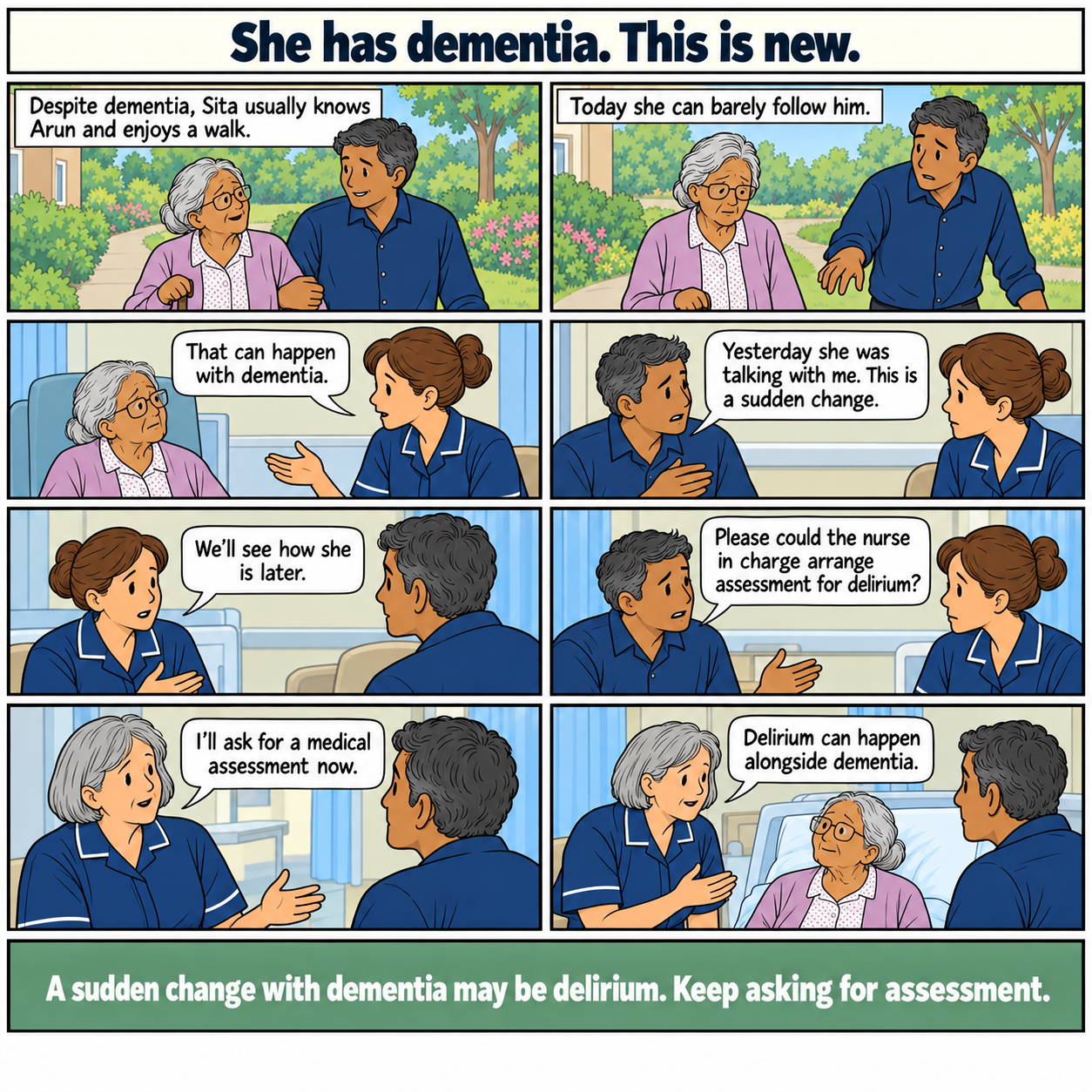
“She has dementia” does not explain every new change. Delirium can happen alongside dementia, and a sudden change from the person’s usual pattern needs a doctor or nurse to check what is wrong.
Give a specific before-and-after example. If the concern is not being addressed, ask again and ask to speak to the nurse in charge. You can use the word delirium without having to prove the diagnosis yourself. The team is responsible for checking and responding to the change.
Story text
-
Panel 1. Despite dementia, Sita usually knows Arun and enjoys a walk.
-
Panel 2. Today she can barely follow him.
-
Panel 3.
- Nurse: That can happen with dementia.
-
Panel 4.
- Arun: Yesterday she was talking with me. This is a sudden change.
-
Panel 5.
- Nurse: We’ll see how she is later.
-
Panel 6.
- Arun: Please could the nurse in charge arrange assessment for delirium?
-
Panel 7.
- Senior nurse: I’ll ask for a medical assessment now.
-
Panel 8.
- Senior nurse: Delirium can happen alongside dementia.
Bottom band. A sudden change with dementia may be delirium. Keep asking for assessment.