Read story B35: Tell us what he usually drinks (image and text)
Stopping or sharply reducing alcohol after regular heavy drinking can cause withdrawal: symptoms that can include delirium. Alcohol withdrawal delirium needs urgent medical treatment. Staff need accurate information about usual drinking and when it last occurred, including when the person is in hospital with another illness.
It can feel difficult to talk about this. The purpose is safe care, not blame. Report new confusion, seeing or hearing things that are not there, or any other worsening promptly. Do not try to manage withdrawal delirium at home. The person should also be offered appropriate ongoing support when they are able to take part.
Story text
-
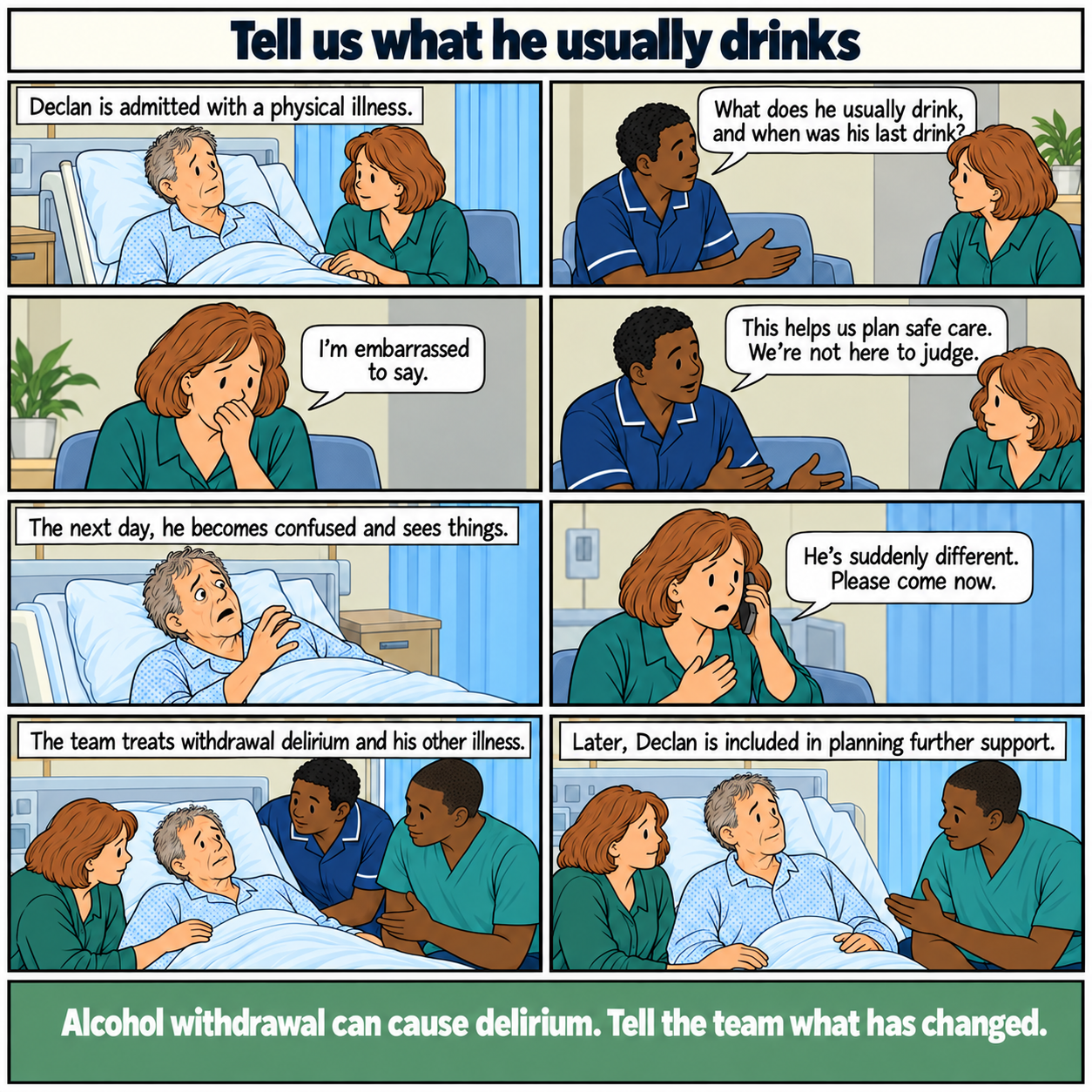
Panel 1. Declan is admitted with a physical illness.
-
Panel 2.
- Nurse: What does he usually drink, and when was his last drink?
-
Panel 3.
- Maureen: I’m embarrassed to say.
-
Panel 4.
- Nurse: This helps us plan safe care. We’re not here to judge.
-
Panel 5. The next day, he becomes confused and sees things.
-
Panel 6.
- Maureen: He’s suddenly different. Please come now.
-
Panel 7. The team treats withdrawal delirium and his other illness.
-
Panel 8. Later, Declan is included in planning further support.
Bottom band. Alcohol withdrawal can cause delirium. Tell the team what has changed.