Includes end-of-life care
Read story B31: The shadows in the hospice (image and text)
Delirium can occur in a hospice. Tell staff about a new change in thinking, attention or behaviour, even when someone is already very ill.
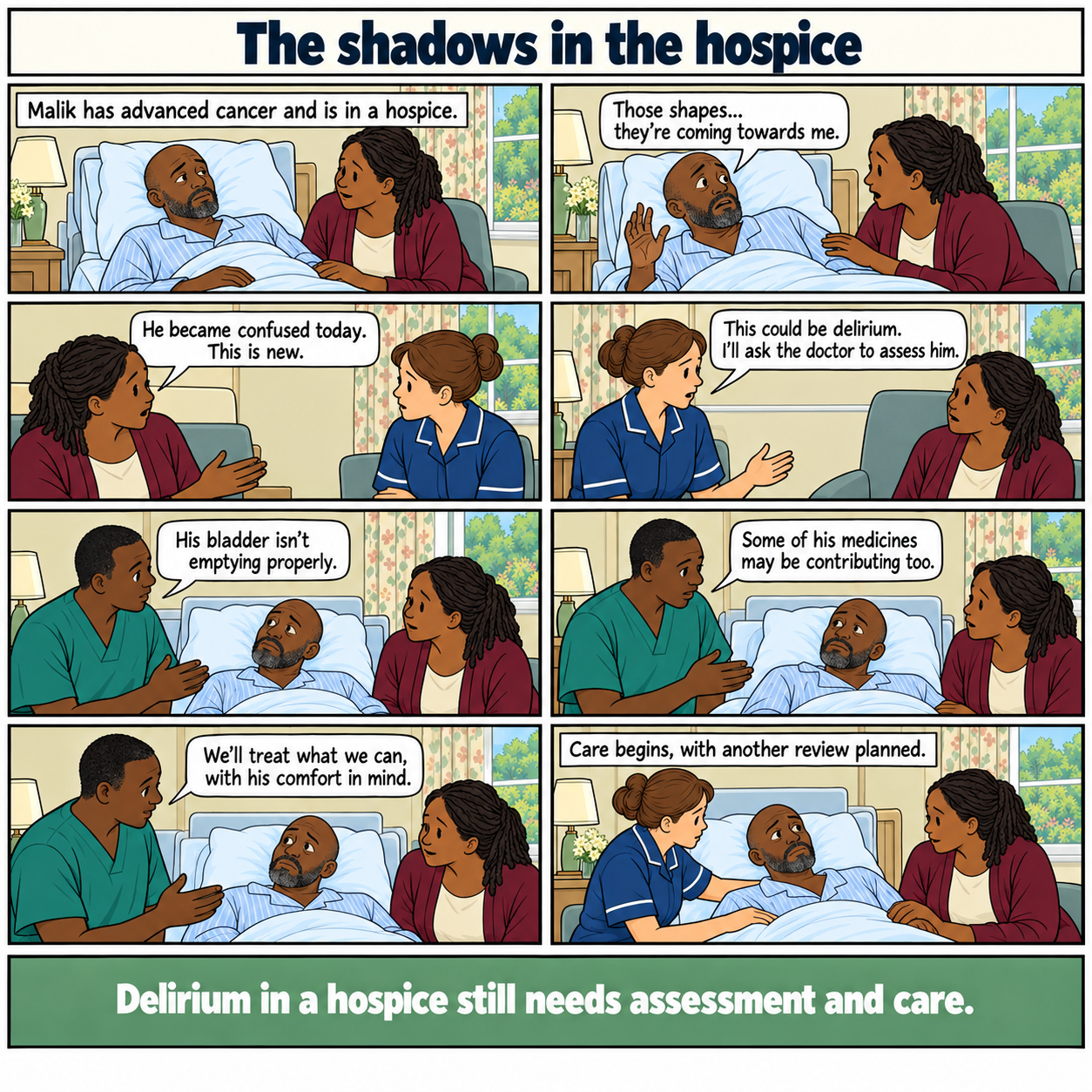
In this illustrated story, the team recognises delirium and finds problems that may be contributing to the distress. The team decides what checks and treatment to offer based on Malik’s condition and wishes. The aim includes helping him feel less frightened and more comfortable. The next story follows what happens after the plan is reviewed.
Story text
-
Panel 1. Malik has advanced cancer and is in a hospice.
-
Panel 2.
- Malik: Those shapes… they’re coming towards me.
-
Panel 3.
- Yvonne: He became confused today. This is new.
-
Panel 4.
- Nurse: This could be delirium. I’ll ask the doctor to assess him.
-
Panel 5.
- Doctor: His bladder isn’t emptying properly.
-
Panel 6.
- Doctor: Some of his medicines may be contributing too.
-
Panel 7.
- Doctor: We’ll treat what we can, with his comfort in mind.
-
Panel 8. Care begins, with another review planned.
Bottom band. Delirium in a hospice still needs assessment and care.