Includes end-of-life care
Read story B23: What comfort looks like (image and text)
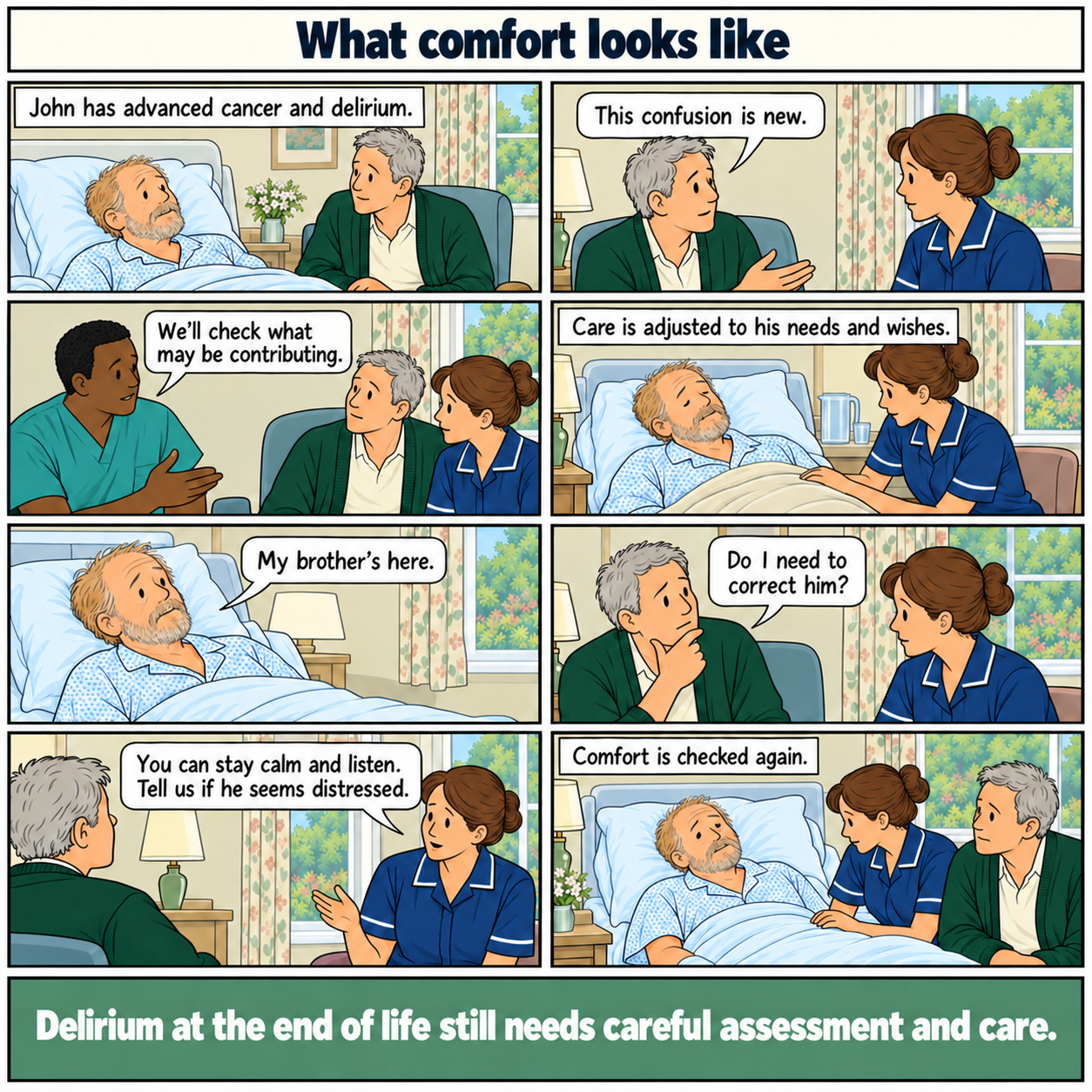
Delirium near the end of life still needs careful assessment by the team and care to keep the person comfortable. Care should take account of the person’s illness, wishes and what is likely to help.
Not every unusual experience is frightening. You do not need to argue about a calm experience, but tell staff about new changes and any signs of distress. A peaceful vision on its own does not mean that the person has delirium. In this story, delirium has already been identified.
Story text
-
Panel 1. John has advanced cancer and delirium.
-
Panel 2.
- Paul: This confusion is new.
-
Panel 3.
- Doctor: We’ll check what may be contributing.
-
Panel 4. Care is adjusted to his needs and wishes.
-
Panel 5.
- John: My brother’s here.
-
Panel 6.
- Paul: Do I need to correct him?
-
Panel 7.
- Nurse: You can stay calm and listen. Tell us if he seems distressed.
-
Panel 8. Comfort is checked again.
Bottom band. Delirium at the end of life still needs careful assessment and care.