Read story B02: Awake but far away (image and text)
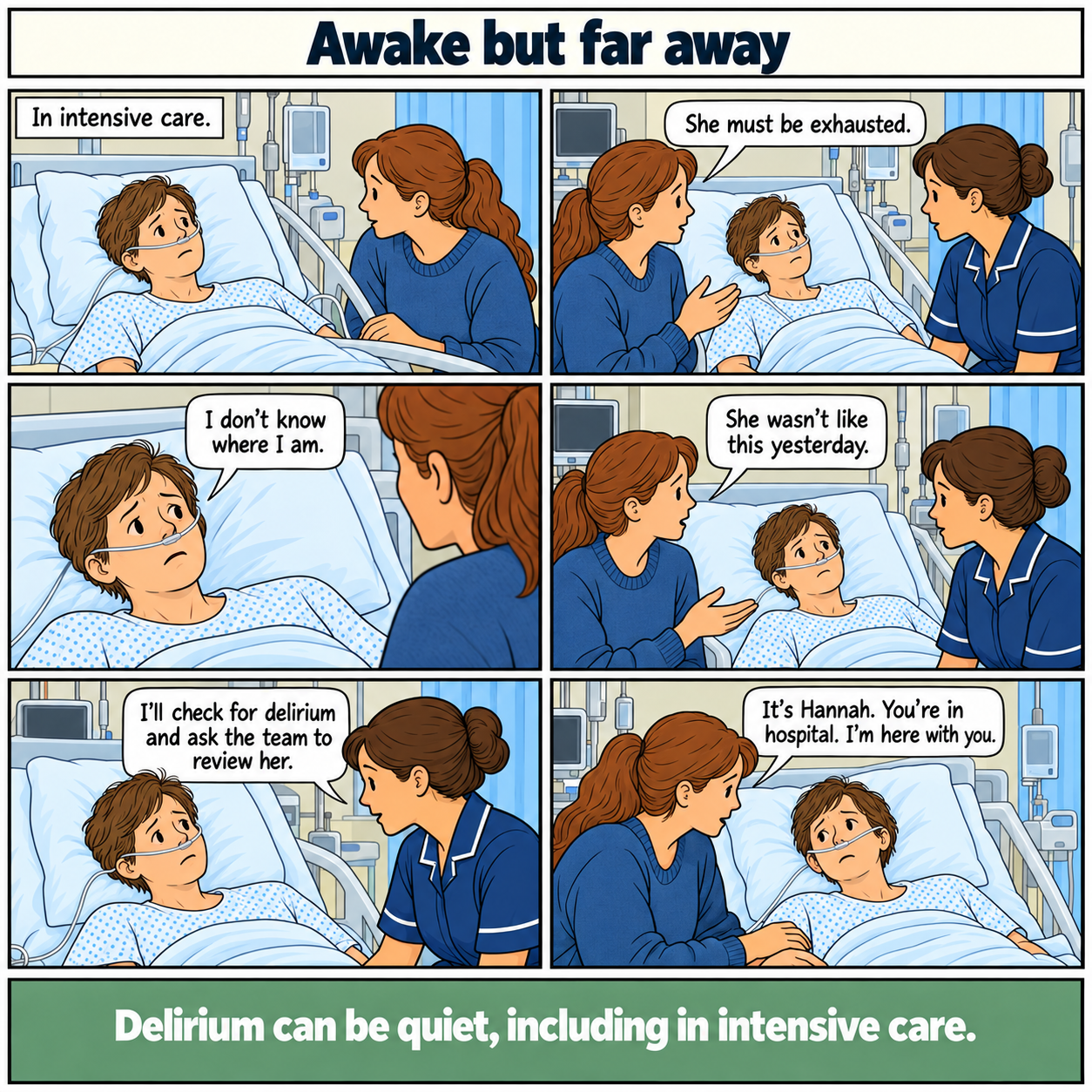
Delirium does not always look restless or visibly upset. Someone may be quiet, less interested in other people or slow to respond, and still feel frightened. This can happen in intensive care, including in younger adults.
Tell the team about changes from the person’s usual self. Ask whether staff have checked for delirium. A familiar voice and a short explanation can be part of care while staff look for and treat the causes.
Story text
-
Panel 1. In intensive care.
-
Panel 2.
- Hannah: She must be exhausted.
-
Panel 3.
- Louise: I don’t know where I am.
-
Panel 4.
- Hannah: She wasn’t like this yesterday.
-
Panel 5.
- Nurse: I’ll check for delirium and ask the team to review her.
-
Panel 6.
- Hannah: It’s Hannah. You’re in hospital. I’m here with you.
Bottom band. Delirium can be quiet, including in intensive care.